Part I · Foundations and the four financial statements · Chapter 5
The Statement of Cash Flows
قائمة التدفقات النقدية
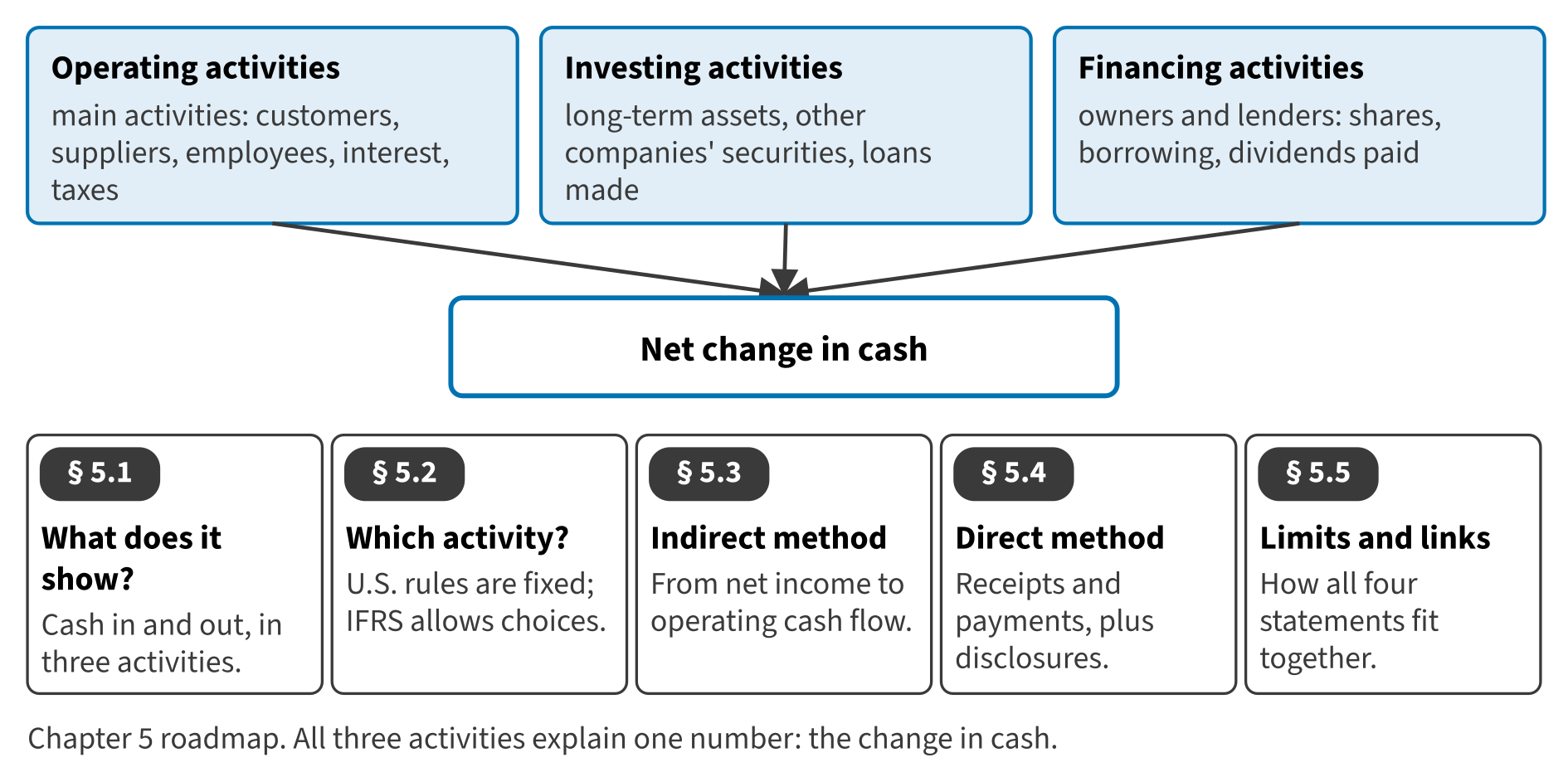
Chapter 3 ended with a surprise: Orontes earned far less profit than cash. This chapter explains that difference. The statement of cash flows shows where cash came from and where it went, and it completes the set of four statements.
Start here
Then
What this chapter is tested on
| LOS | Official statement (ICMA, 2024) | In plain words | Depth here |
|---|---|---|---|
| A.1.b | demonstrate an understanding of the purposes and uses of each statement | Explain the purpose of the statement of cash flows and how users apply it. | Full treatment (cash flows) |
| A.1.c | identify the major components and classifications of each statement | Classify cash flows as operating, investing or financing under U.S. GAAP, and contrast IFRS. | Full treatment (cash flows) |
| A.1.g | demonstrate an understanding of how a balance sheet, an income statement, a statement of changes in equity, and a statement of cash flows (indirect method) are prepared | Prepare operating cash flow by the indirect method and understand the direct method. | Full treatment |
| A.1.f | demonstrate an understanding of the relationship among the financial statements | Show how all four statements fit together. | Full treatment |
| A.1.d | identify the limitations of each financial statement | Identify the limitations of the statement of cash flows. | Full treatment (cash flows) |
The official statements are quoted from the ICMA Learning Outcome Statements (effective September 1, 2024). The plain-words column restates them in simpler English. The exam may test any outcome up to Level C.
What you already know
IFRS uses the same three sections, but IAS 7 lets companies choose where to put interest and dividends. U.S. GAAP gives no choice. If you learned the IFRS habit of putting interest paid in financing, you must unlearn it for this exam.
The 8 key terms
Every scene has Check Answers and Try Again. Try Again reshuffles rather than revealing. When you are wrong, the first thing you read is the reason for the option you chose, taken from the book's own explanations. Progress is saved in this browser.