Part II · Recognition and measurement of assets · Chapter 9
Investments in Debt and Equity Securities
الاستثمار في أدوات الدين وأدوات حقوق الملكية
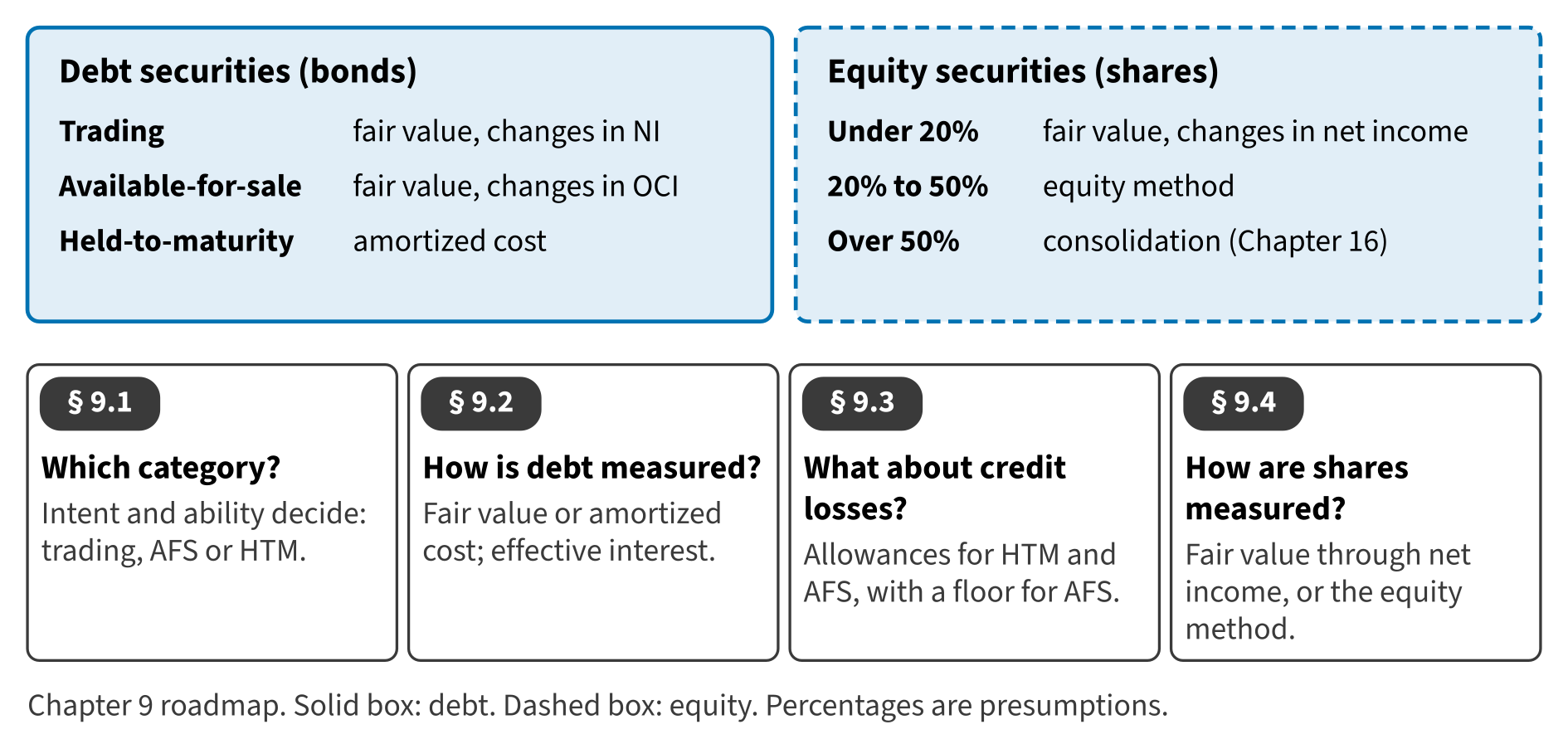
Companies invest spare cash in bonds and shares, and they buy shares in suppliers and partners. U.S. GAAP measures these investments in different ways, depending on what the company intends to do with them and how much influence it has. In this chapter you learn the categories, how each one is measured, and where the gains and losses go.
Start here
Then
What this chapter is tested on
| LOS | Official statement (ICMA, 2024) | In plain words | Depth here |
|---|---|---|---|
| A.2.j | demonstrate an understanding of the following debt security types: trading, available-for-sale, and held-to-maturity | Classify debt securities as trading, available-for-sale or held-to-maturity. | Full treatment |
| A.2.k | demonstrate an understanding of the valuation of debt and equity securities | Measure debt and equity securities, including credit losses and the equity method. | Full treatment |
| A.2.ff | identify and describe the following differences between U.S. GAAP and IFRS: (i) expense recognition, with respect to share-based payments and employee benefits; (ii) intangible assets, with respect to development costs and revaluation; (iii) inventories, with respect to costing methods, valuation, and write-downs (e.g., LIFO); (iv) leases, with respect to lessee operating and finance leases; (v) long-lived assets, with respect to revaluation, depreciation, and capitalization of borrowing costs; and (vi) impairment of assets, with respect to determination, calculation, and reversal of loss | State the IFRS 9 and IAS 28 differences. | Preview (full in Chapter 17) |
The official statements are quoted from the ICMA Learning Outcome Statements (effective September 1, 2024). The plain-words column restates them in simpler English. The exam may test any outcome up to Level C.
What you already know
If you studied IFRS 9, you classify financial assets by business model and cash flows. U.S. GAAP classifies debt by management's intent, and it has one big surprise for IFRS readers: there is no option to put gains on shares in OCI. If you studied the older IAS 39, the words available-for-sale and held-to-maturity will feel familiar.
The 10 key terms
Every scene has Check Answers and Try Again. Try Again reshuffles rather than revealing. When you are wrong, the first thing you read is the reason for the option you chose, taken from the book's own explanations. Progress is saved in this browser.