Part I · Cost language and behavior · Chapter 1
Cost Objects, Pools and Drivers
أهداف التكلفة ومجمعاتها ومسبباتها
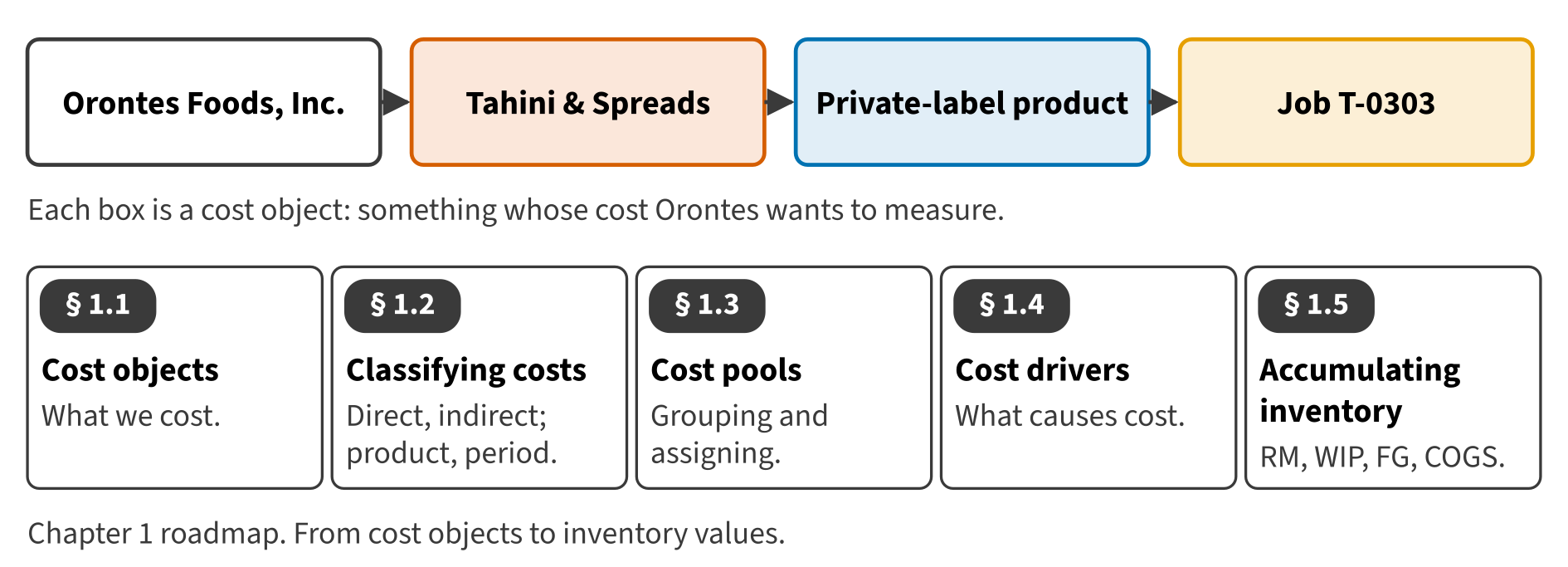
Book 1 looked at Orontes from the outside, through its financial statements. Book 2 looks inside. Managers need to know what a product, an order or a customer costs, so that they can set prices, control spending and value inventory.
Start here
Then
What this chapter is tested on
| LOS | Official statement (ICMA, 2024) | In plain words | Depth here |
|---|---|---|---|
| D.1.b | identify cost objects and cost pools, and assign costs to appropriate activities | Identify cost objects and cost pools, and assign costs to the right activities. | Full treatment |
| D.1.c | demonstrate an understanding of the nature and types of cost drivers and the causal relationship that exists between cost drivers and costs incurred | Explain the types of cost drivers and the causal link between drivers and costs. | Full treatment |
| D.1.d | demonstrate an understanding of the various methods for measuring costs and accumulating work-in-process and finished goods inventories | Describe the methods for measuring costs and accumulating work in process and finished goods. | Full treatment + Extended Example |
The official statements are quoted from the ICMA Learning Outcome Statements (effective September 1, 2024). The plain-words column restates them in simpler English. The exam may test any outcome up to Level C.
What you already know
In Book 1 you met inventory, cost of goods sold and the idea that expenses are matched with revenue. You also saw that Orontes carries inventory at cost under ASC 330. This book explains how that cost is built.
The 8 key terms
Every scene has Check Answers and Try Again. Try Again reshuffles rather than revealing. When you are wrong, the first thing you read is the reason for the option you chose, taken from the book's own explanations. Progress is saved in this browser.