Part I · Cost language and behavior · Chapter 2
Cost Behavior and the Relevant Range
سلوك التكلفة والمدى الملائم
The Oils division expects to run its crushers for 38,400 machine hours in 2027. What if a good harvest pushes that higher, or a drought pulls it lower? Some costs will move with the hours and some will not. Managers must know which, before they can budget, price or control.
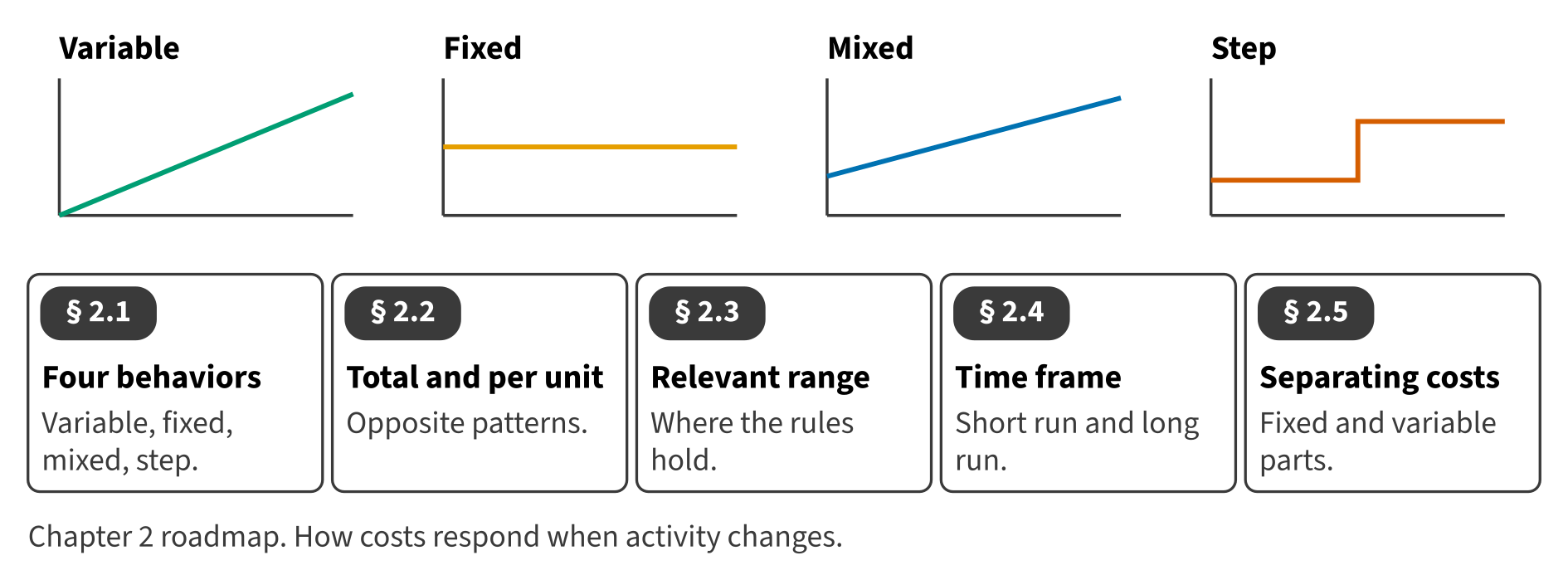
Start here
Then
What this chapter is tested on
| LOS | Official statement (ICMA, 2024) | In plain words | Depth here |
|---|---|---|---|
| D.1.a | calculate fixed, variable, and mixed costs, and demonstrate an understanding of the behavior of each in the long and short term and how a change in assumptions regarding cost type or relevant range affects these costs | Calculate fixed, variable and mixed costs, and explain their behavior in the short and long term and within the relevant range. | Full treatment + Extended Example |
| D.3.a | distinguish between fixed and variable overhead expenses | Distinguish between fixed and variable overhead. | Full treatment |
| D.3.b | determine the appropriate time frame for classifying both variable and fixed overhead expenses | Determine the right time frame for classifying overhead as fixed or variable. | Full treatment |
| B.5.k | separate costs into their fixed and variable components | Separate costs into their fixed and variable components. | Full treatment (account analysis); high-low and regression in Chapter 3 |
The official statements are quoted from the ICMA Learning Outcome Statements (effective September 1, 2024). The plain-words column restates them in simpler English. The exam may test any outcome up to Level C.
What you already know
Chapter 1 sorted costs into direct and indirect, and product and period. Here we sort them a third way, by behavior. The Oils figures come from the same ledger: the olive-press lease from Book 1, the service department charges and the 24 months of maintenance data.
The 8 key terms
Every scene has Check Answers and Try Again. Try Again reshuffles rather than revealing. When you are wrong, the first thing you read is the reason for the option you chose, taken from the book's own explanations. Progress is saved in this browser.