Part II · Measuring product cost · Chapter 6
Job Order Costing
نظام تكاليف الأوامر الإنتاجية
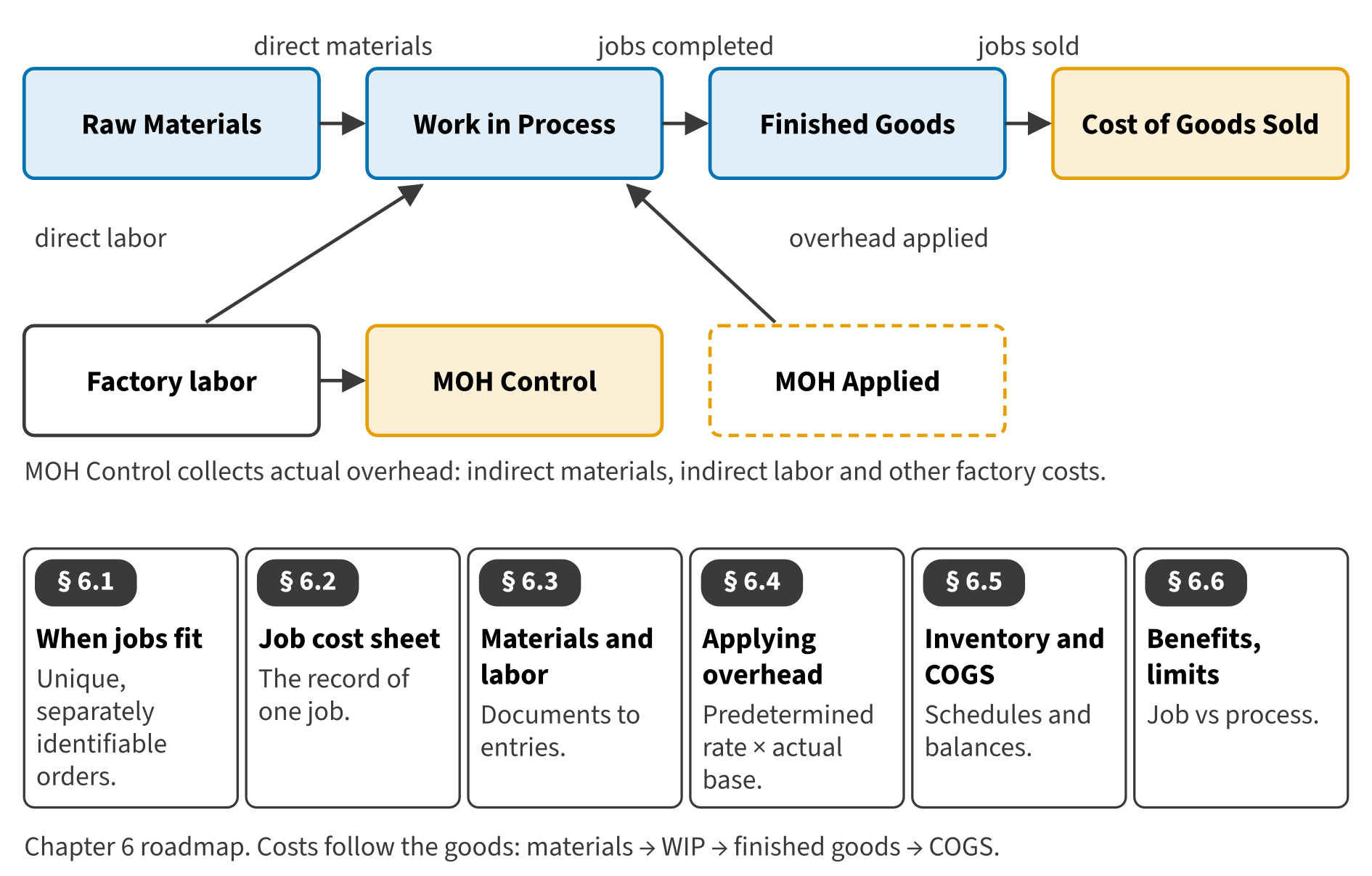
Orontes's Tahini & Spreads division makes private-label tahini and halva for supermarkets such as Barada Wholesale. Each order has its own recipe, jar and label. The controller must know what each order costs, so that she can price the next one and value the inventory.
Start here
Then
What this chapter is tested on
| LOS | Official statement (ICMA, 2024) | In plain words | Depth here |
|---|---|---|---|
| D.2.a | define the nature of the system, understand the cost flows of the system, and identify its appropriate use | Define the nature of job order costing, follow its cost flows and identify when to use it. | Full treatment |
| D.2.b | calculate inventory values and cost of goods sold | Calculate job costs, inventory values and cost of goods sold. | Full treatment + Extended Example |
| D.2.e | identify and describe the benefits and limitations of each cost accumulation system | Identify and describe the benefits and limitations of job order costing. | Full treatment |
The official statements are quoted from the ICMA Learning Outcome Statements (effective September 1, 2024). The plain-words column restates them in simpler English. The exam may test any outcome up to Level C.
What you already know
In Book 1 you valued inventory at cost and moved cost to cost of goods sold when goods were sold. Chapter 1 of this book added raw materials, work in process and finished goods. Chapter 5 introduced normal costing: actual direct costs plus overhead applied at a predetermined rate. Job order costing puts these pieces together for one order at a time.
The 8 key terms
Every scene has Check Answers and Try Again. Try Again reshuffles rather than revealing. When you are wrong, the first thing you read is the reason for the option you chose, taken from the book's own explanations. Progress is saved in this browser.