Part II · Measuring product cost · Chapter 8
Overhead Rates and Over- or Under-Applied Overhead
معدلات تحميل التكاليف غير المباشرة وفروق التحميل
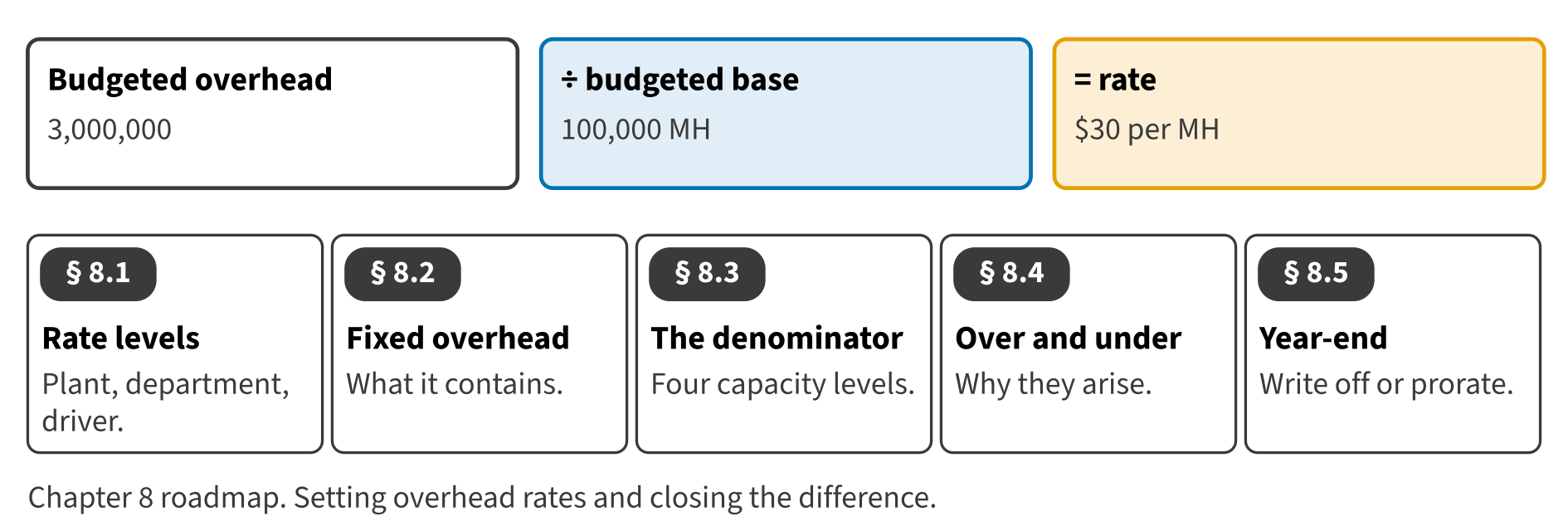
Chapter 6 applied Tahini & Spreads overhead at $30 per machine hour, and Chapter 1 ended the year with $230,000 of overhead underapplied. This chapter explains where the rate came from and what happens to the difference at year-end.
Start here
Then
What this chapter is tested on
| LOS | Official statement (ICMA, 2024) | In plain words | Depth here |
|---|---|---|---|
| D.3.c | demonstrate an understanding of the different methods of determining overhead rates (e.g., corporate-wide rates, departmental rates, and individual cost driver rates) | Explain plantwide, departmental and individual cost-driver overhead rates. | Full treatment |
| D.3.d | describe the benefits and limitations of each of the methods used to determine overhead rates | Describe the benefits and limitations of each rate method. | Full treatment |
| D.3.h | identify the components of fixed overhead expense | Identify the components of fixed overhead. | Full treatment |
| D.3.i | identify the appropriate allocation base for fixed overhead expense | Identify the right allocation base for fixed overhead. | Full treatment |
| D.3.j | calculate the fixed overhead application rate | Calculate the fixed overhead application rate. | Full treatment + Extended Example |
| D.3.k | describe how fixed overhead can be over- or under-applied and how this difference should be accounted for in the cost of goods sold, work-in-process, and finished goods accounts | Describe how overhead becomes over- or under-applied and how the difference is closed to COGS, WIP and finished goods. | Full treatment + Extended Example |
The official statements are quoted from the ICMA Learning Outcome Statements (effective September 1, 2024). The plain-words column restates them in simpler English. The exam may test any outcome up to Level C.
What you already know
Chapter 5 defined normal costing and the predetermined rate. Chapter 2 separated fixed and variable costs. Here the fixed part of the rate gets special attention, because its denominator is a choice.
The 8 key terms
Every scene has Check Answers and Try Again. Try Again reshuffles rather than revealing. When you are wrong, the first thing you read is the reason for the option you chose, taken from the book's own explanations. Progress is saved in this browser.