Part III · Costing systems and business processes · Chapter 16
Continuous Improvement and the Cost of Quality
التحسين المستمر وتكاليف الجودة
In 2027 the Beverages division spent $400,000 on defects its customers found: returns, complaints and customers who stopped buying. It spent only $120,000 on stopping defects in the first place. This chapter measures the cost of quality and shows why that balance was wrong.
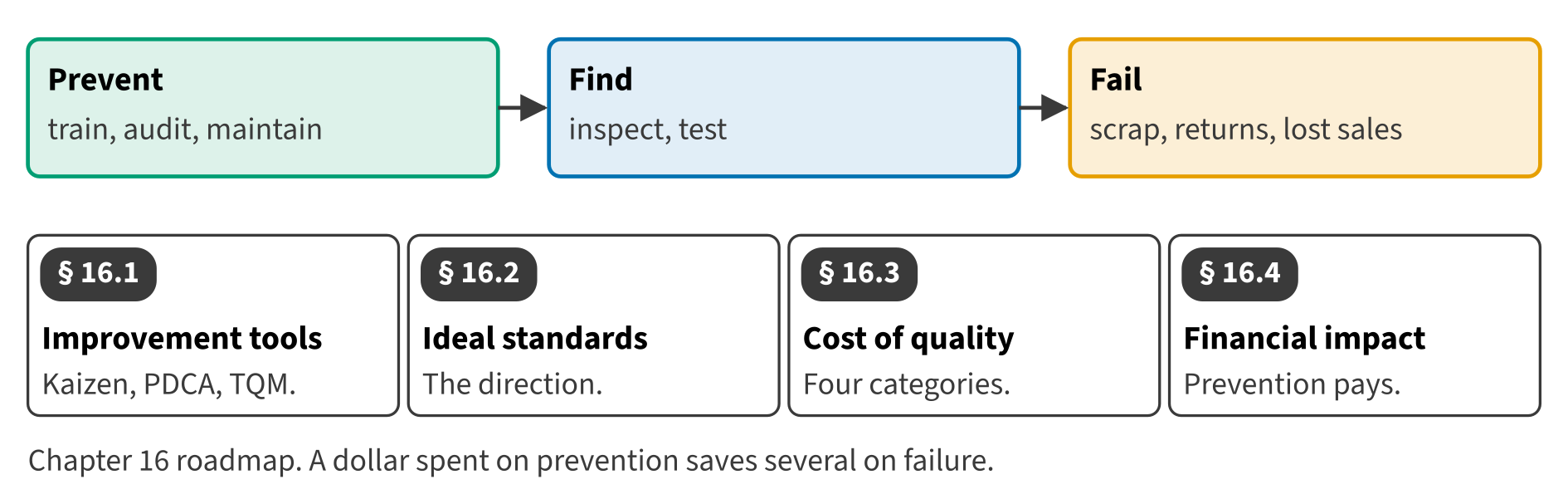
Start here
Then
What this chapter is tested on
| LOS | Official statement (ICMA, 2024) | In plain words | Depth here |
|---|---|---|---|
| D.5.i | explain the relationship between continuous improvement techniques and quality performance | Explain how continuous improvement techniques raise quality performance. | Full treatment |
| D.5.j | explain the concept of continuous improvement and how it relates to implementing ideal standards and quality improvements | Explain continuous improvement and how it moves standards toward the ideal and improves quality. | Full treatment |
| D.5.k | identify and describe the components of the costs of quality, commonly referred to as prevention costs, appraisal costs, internal failure costs, and external failure costs | Name and describe the four costs of quality: prevention, appraisal, internal failure and external failure. | Full treatment |
| D.5.l | calculate the financial impact of implementing the above-mentioned processes | Calculate the financial impact of continuous improvement and quality programs. | Full treatment + Extended Example |
The official statements are quoted from the ICMA Learning Outcome Statements (effective September 1, 2024). The plain-words column restates them in simpler English. The exam may test any outcome up to Level C.
What you already know
Chapter 7 treated spoilage and rework in product cost, and Chapter 15 redesigned a process in one big step. This chapter improves processes in many small steps and measures what poor quality really costs.
The 11 key terms
Every scene has Check Answers and Try Again. Try Again reshuffles rather than revealing. When you are wrong, the first thing you read is the reason for the option you chose, taken from the book's own explanations. Progress is saved in this browser.