Part III · Measuring and managing performance · Chapter 18
Critical Success Factors, KPIs and the Balanced Scorecard
عوامل النجاح الحاسمة ومؤشرات الأداء وبطاقة الأداء المتوازن
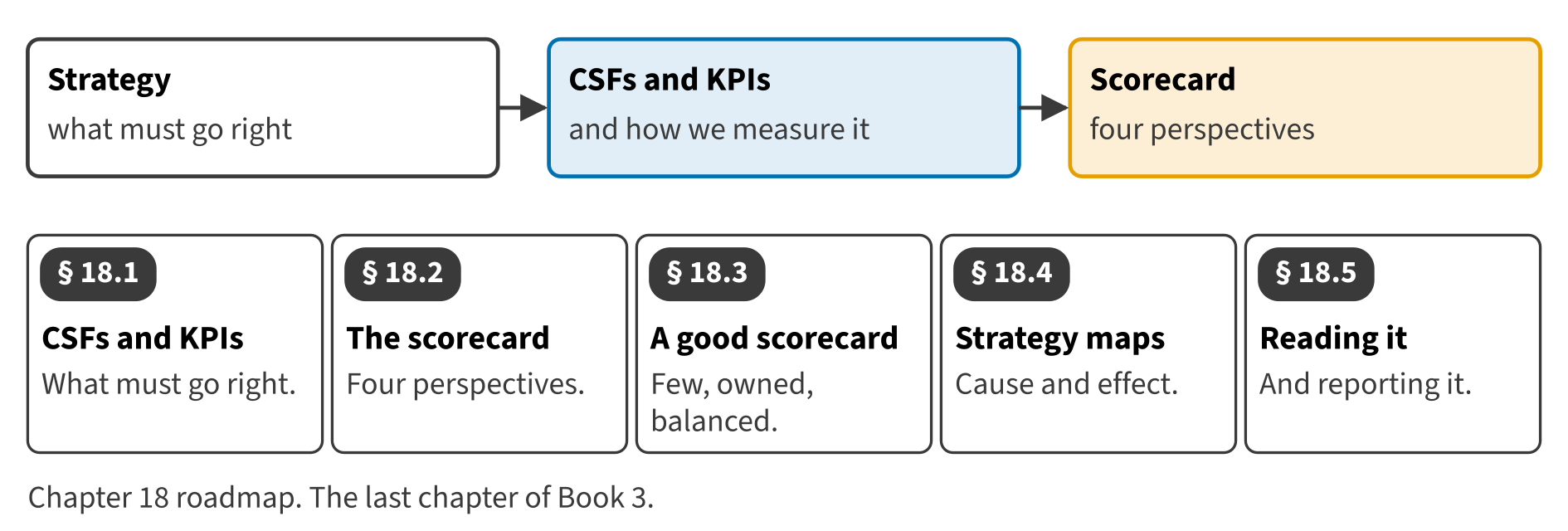
Book 3 began with a strategy and a five-year plan. It then built a budget, measured the results against it, and asked who should answer for each number. This last chapter closes the circle. It shows how a company turns its strategy into a small set of measures, and how it reads them together instead of one at a time.
Start here
Then
What this chapter is tested on
| LOS | Official statement (ICMA, 2024) | In plain words | Depth here |
|---|---|---|---|
| C.3.l | define critical success factors (CSFs) and KPIs and discuss the importance of these measures in evaluating an organization | Define critical success factors and key performance indicators, and explain why they matter. | Full treatment |
| C.3.m | define the concept of a balanced scorecard and identify its components | Define the balanced scorecard and identify its components. | Full treatment |
| C.3.n | identify and describe the perspectives of a balanced scorecard, including financial, customer, internal process, and learning and growth | Describe the four perspectives of a balanced scorecard. | Full treatment |
| C.3.o | identify and describe the characteristics of an effective balanced scorecard | Describe the characteristics of an effective balanced scorecard. | Full treatment |
| C.3.p | demonstrate an understanding of a strategy map and the role it plays | Explain a strategy map and the role it plays. | Full treatment |
| C.3.q | analyze and interpret a balanced scorecard and evaluate performance based on the analysis | Analyse and interpret a balanced scorecard and evaluate performance from it. | Full treatment + Extended Example |
| C.3.r | recommend performance measures and a periodic reporting methodology given operational goals and actual results | Recommend performance measures and a reporting schedule for given goals and results. | Full treatment + Extended Example |
The official statements are quoted from the ICMA Learning Outcome Statements (effective September 1, 2024). The plain-words column restates them in simpler English. The exam may test any outcome up to Level C.
What you already know
Chapter 1 set the Orontes objectives for 2028 to 2032. Chapter 17 measured the financial result, and Chapters 11 to 14 explained the variances that lie behind it.
The 10 key terms
Every scene has Check Answers and Try Again. Try Again reshuffles rather than revealing. When you are wrong, the first thing you read is the reason for the option you chose, taken from the book's own explanations. Progress is saved in this browser.