Part III · Information systems · Chapter 12
System Development, Automation and Emerging Technology
تطوير النظم والأتمتة والتقنيات الناشئة
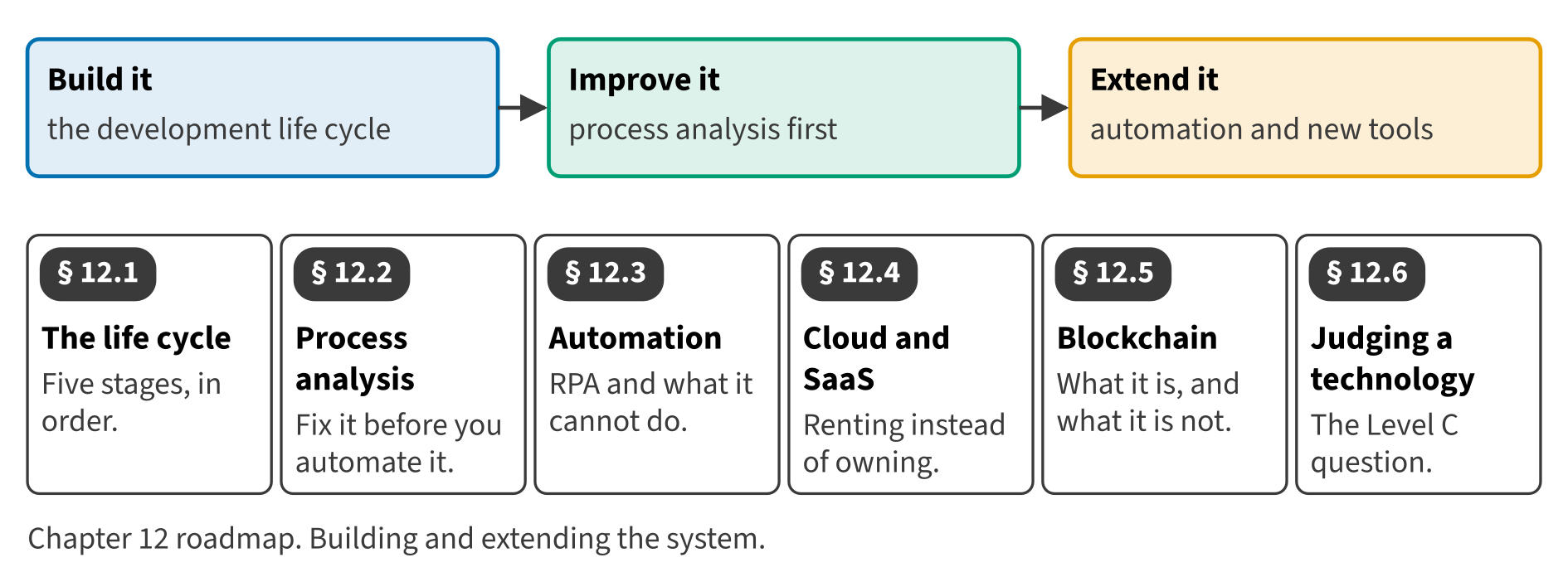
Chapters 9 to 11 described systems that already exist. This chapter asks how a system comes to exist in the first place, how it is improved, and which of the newer technologies are worth the attention they attract.
Start here
Then
What this chapter is tested on
| LOS | Official statement (ICMA, 2024) | In plain words | Depth here |
|---|---|---|---|
| F.3.a | define the system development life cycle, including systems analysis, conceptual design, physical design, implementation and conversion, and operations and maintenance | Define the system development life cycle and its five stages. | Full treatment |
| F.3.b | explain the role of business process analysis in improving system performance | Explain the role of business process analysis in improving system performance. | Full treatment |
| F.3.c | define robotic process automation (RPA) and its benefits | Define robotic process automation and its benefits. | Full treatment |
| F.3.d | evaluate where technologies can improve efficiency and effectiveness of processing accounting data and information (e.g., artificial intelligence (AI)) | Evaluate where technologies can improve the efficiency and effectiveness of processing accounting data. | Full treatment + Extended Example |
| F.3.e | define cloud computing and describe how it can improve efficiency | Define cloud computing and describe how it can improve efficiency. | Full treatment |
| F.3.f | define software-as-a-service (SaaS) and explain its advantages and disadvantages | Define software as a service and explain its advantages and disadvantages. | Full treatment |
| F.3.g | recognize potential applications of blockchain, distributed ledger, and smart contracts | Recognize potential applications of blockchain, distributed ledger and smart contracts. | Full treatment |
The official statements are quoted from the ICMA Learning Outcome Statements (effective September 1, 2024). The plain-words column restates them in simpler English. The exam may test any outcome up to Level C.
What you already know
Chapter 7 listed system development controls and said that Chapter 12 would return to the life cycle itself. This is that chapter, and Chapter 10's ERP implementation is the project it describes.
The 10 key terms
Every scene has Check Answers and Try Again. Try Again reshuffles rather than revealing. When you are wrong, the first thing you read is the reason for the option you chose, taken from the book's own explanations. Progress is saved in this browser.