Part IV · Data analytics · Chapter 14
Data Mining and SQL
التنقيب في البيانات ولغة الاستعلام الهيكلية
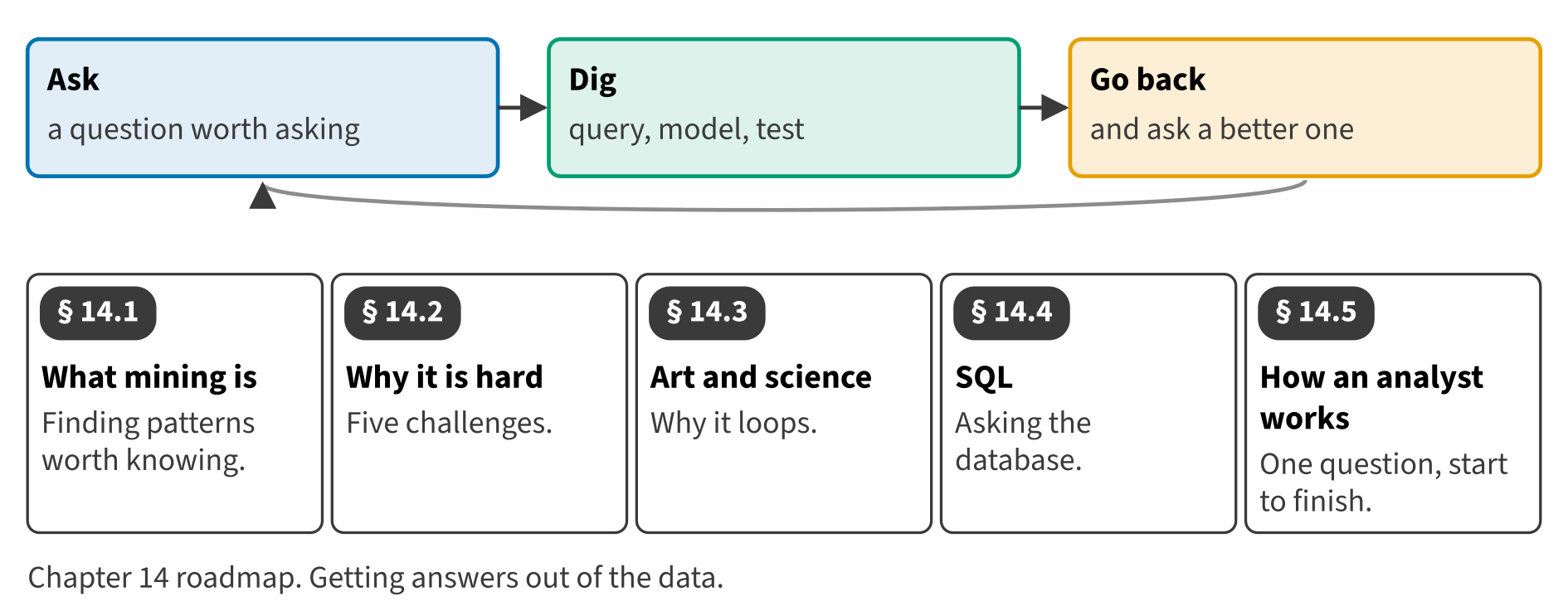
Chapter 13 ended with a distinction: knowledge is a pattern, and insight explains it. This chapter is about the work of finding both, and about why that work loops back on itself so often.
Start here
Then
What this chapter is tested on
| LOS | Official statement (ICMA, 2024) | In plain words | Depth here |
|---|---|---|---|
| F.4.g | define data mining | Define data mining. | Full treatment |
| F.4.h | describe the challenges of data mining | Describe the challenges of data mining. | Full treatment |
| F.4.i | explain why data mining is an iterative process and both an art and a science | Explain why data mining is an iterative process and both an art and a science. | Full treatment |
| F.4.j | explain the purpose of Structured Query Language (SQL) | Explain the purpose of Structured Query Language. | Full treatment |
| F.4.k | describe how an analyst would mine large data sets to reveal patterns and provide insights | Describe how an analyst would mine a large dataset to reveal patterns and provide insights. | Full treatment + Extended Example |
The official statements are quoted from the ICMA Learning Outcome Statements (effective September 1, 2024). The plain-words column restates them in simpler English. The exam may test any outcome up to Level C.
What you already know
Chapter 11 prepared a dataset and Chapter 10 held it in a relational database. This chapter asks the database questions, and the keys of Figure F410-05 are what make the questions answerable.
The 5 key terms
Every scene has Check Answers and Try Again. Try Again reshuffles rather than revealing. When you are wrong, the first thing you read is the reason for the option you chose, taken from the book's own explanations. Progress is saved in this browser.