Part IV · Data analytics · Chapter 16
Time Series and the Quality of a Model
تحليل السلاسل الزمنية وجودة النموذج
Chapter 15 explained demand by what moved alongside it. This chapter explains it by when it happened, which is a different question and needs a different method.
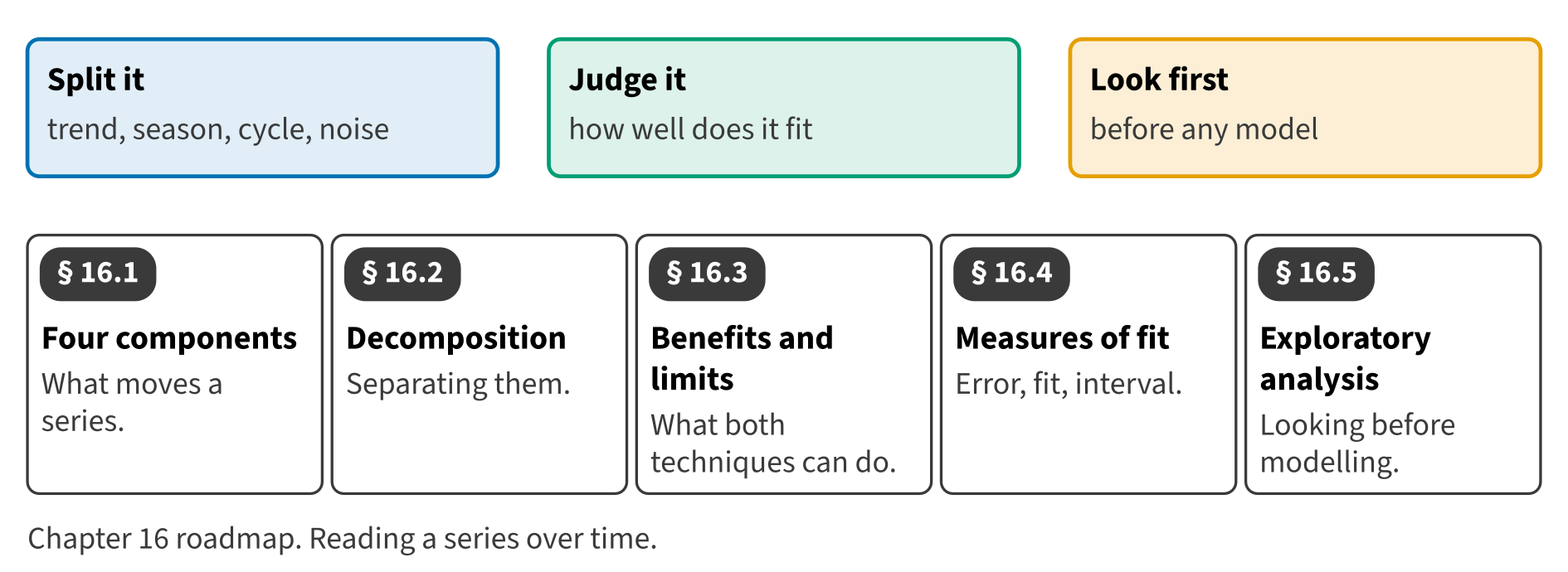
Start here
Then
What this chapter is tested on
| LOS | Official statement (ICMA, 2024) | In plain words | Depth here |
|---|---|---|---|
| F.4.r | demonstrate an understanding of time series analyses, including trend, cyclical, seasonal, and irregular patterns | Demonstrate an understanding of time series analysis, including trend, cyclical, seasonal and irregular patterns. | Full treatment + Extended Example |
| F.4.s | identify and explain the benefits and limitations of regression analysis and time series analysis | Identify and explain the benefits and limitations of regression analysis and time series analysis. | Full treatment |
| F.4.t | define standard error of the estimate, goodness of fit, and confidence interval | Define standard error of the estimate, goodness of fit and confidence interval. | Full treatment |
| F.4.v | describe exploratory data analysis and how it is used to reveal patterns and discover insights | Describe exploratory data analysis and how it reveals patterns and insights. | Full treatment |
The official statements are quoted from the ICMA Learning Outcome Statements (effective September 1, 2024). The plain-words column restates them in simpler English. The exam may test any outcome up to Level C.
What you already know
Book 2 forecast sales from a trend line and Book 3 budgeted four quarters that rose and fell. This chapter gives the technique behind both, and uses the same eight quarters Chapter 15 modelled.
The 10 key terms
Every scene has Check Answers and Try Again. Try Again reshuffles rather than revealing. When you are wrong, the first thing you read is the reason for the option you chose, taken from the book's own explanations. Progress is saved in this browser.